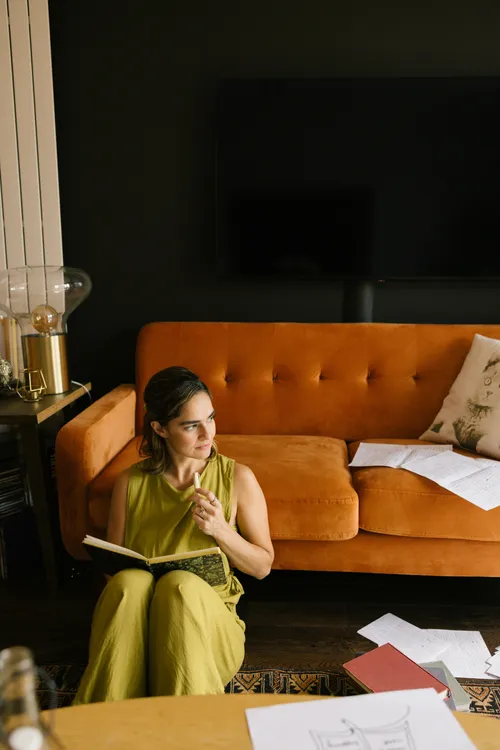
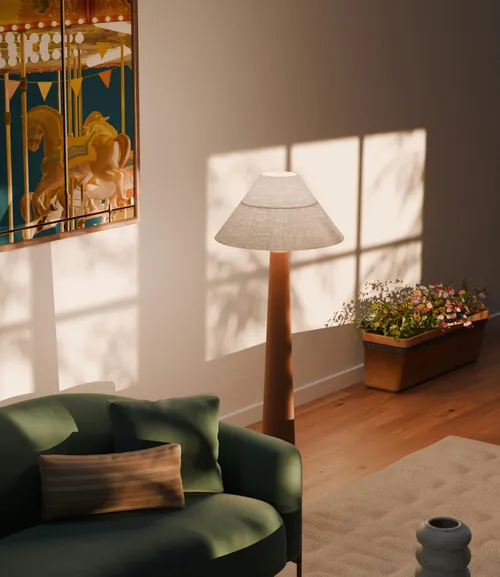
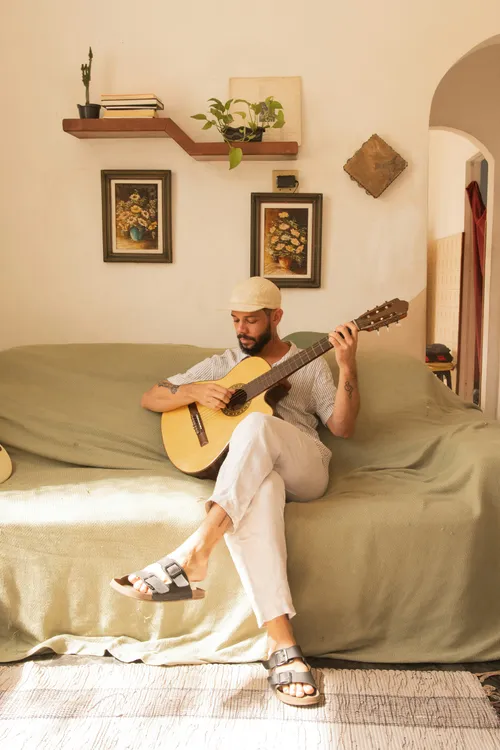
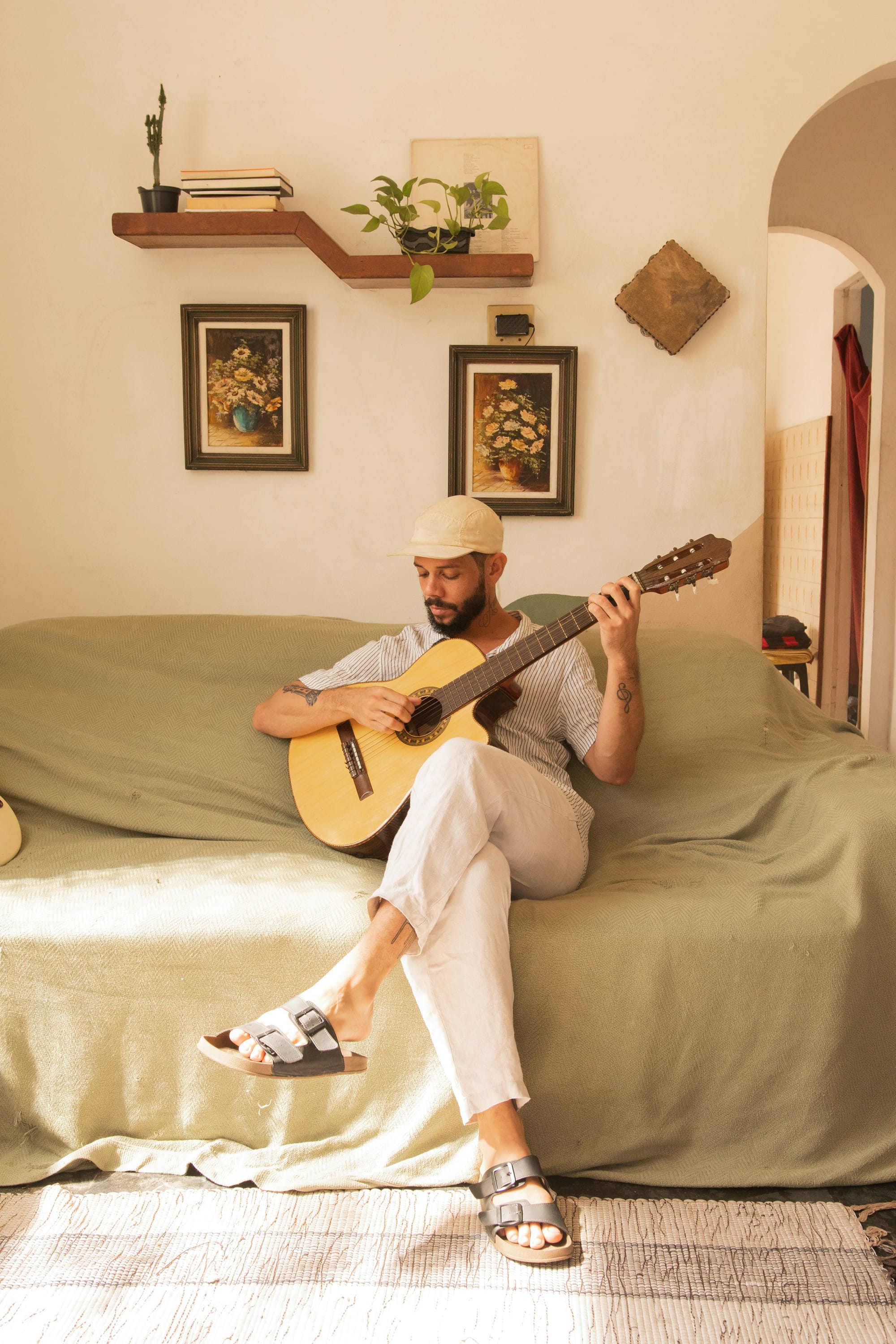
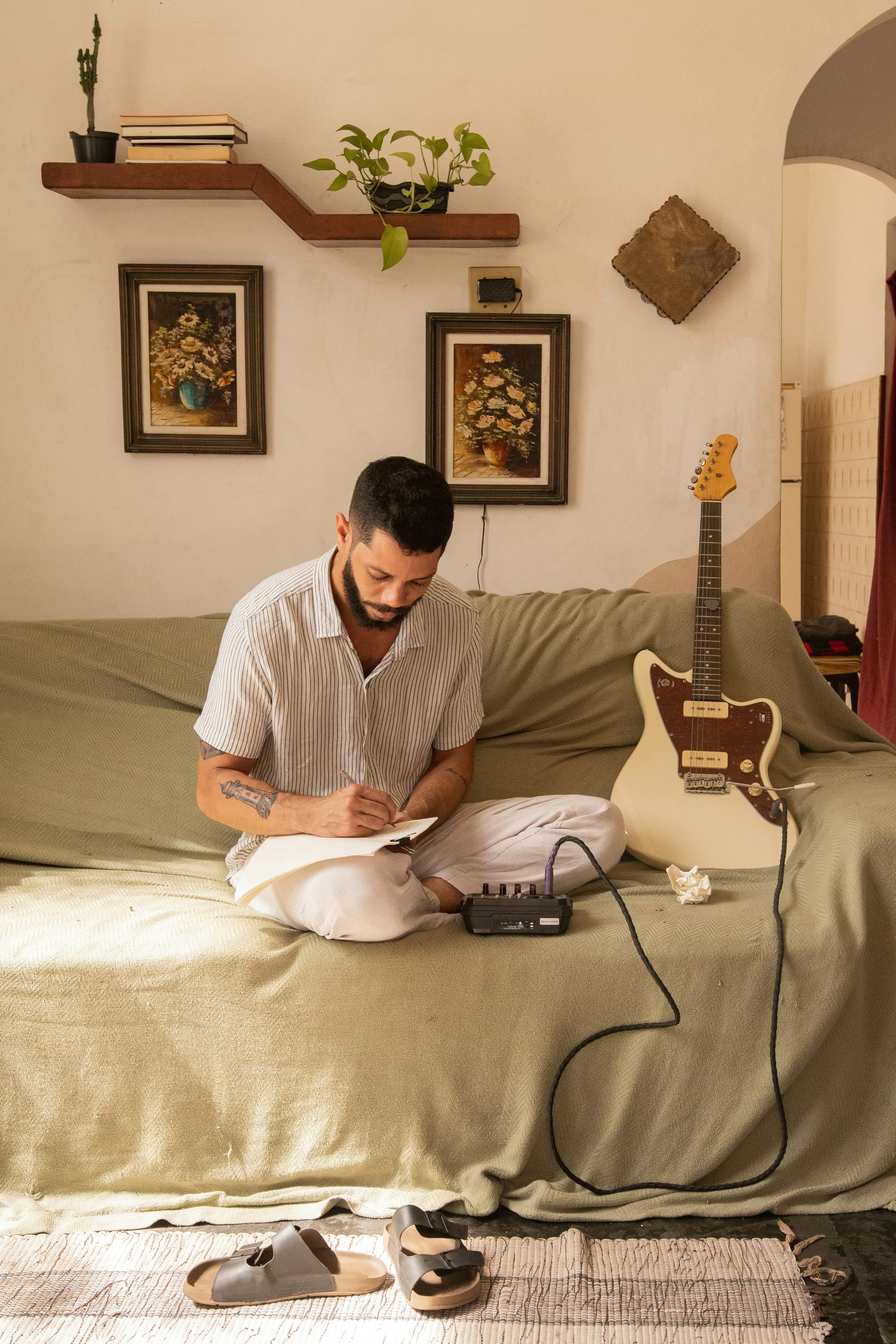
Visual noise is not the same thing as having too many things. A room can be full and still feel calm if the objects share rhythm, purpose, or space. The problem begins when everything asks to be seen at the same volume. The eye has nowhere to rest, so the room feels louder than it is. Quietness, in this sense, is not emptiness. It is hierarchy.
The Infinite Software Crisis Jake Nations Netflix
0:00
/1136.43102
Reducing noise starts with choosing what should lead. It might be the light, a table, a chair, a view, or a wall of books. Once the leader is clear, the rest of the room can support it instead of competing. The edit becomes less about removal and more about relationships. Some objects only become too loud because they have been left without a clear neighbor.
Objects feel calmer when they have company. Gather books, ceramics, tools, or papers into small groups instead of spreading them evenly across every surface. Grouping gives the eye places to land and places to rest. Color can do the same work when a few tones repeat across the room. Repetition makes unrelated things feel like they are part of the same sentence.
Objects feel calmer when they have company.
Editing a room should not erase personal history. A travel object, inherited bowl, old book, or imperfect chair can stay if it still carries meaning and has enough room around it. The aim is to give important objects a clearer role, not to make the room anonymous. A home that has been edited too far can lose the very evidence that made it worth looking at.
Quietness, in this sense, is not emptiness. It is hierarchy.
The goal is not minimalism as a style. It is readability. A room should tell you where to look, where to sit, and what kind of day it can hold. Calm is an editing decision, not an absence of things. The best rooms do not remove life from view. They give life a structure that lets it be felt.
A room often becomes noisy through kindness. Gifts stay because they were given with care. Books remain because they once mattered. Small objects gather because each one has a story that seems too personal to remove. The edit becomes difficult because the problem is not bad taste; it is accumulated affection. A good room edit has to respect that. It cannot treat every object as clutter simply because the eye is tired.
The better question is not what should disappear, but what deserves more room. Some objects become meaningful again when they are separated from the crowd. A bowl moved to an open shelf, a book placed near the chair where it is actually read, a textile folded where the light can reach it. The room quiets down not because its history has been erased, but because the history has been given a clearer voice.
A room often becomes noisy through kindness. Gifts stay because they were given with care. Books remain because they once mattered. Small objects gather because each one has a story that seems too personal to remove. The edit becomes difficult because the problem is not bad taste; it is accumulated affection. A good room edit has to respect that. It cannot treat every object as clutter simply because the eye is tired.
The better question is not what should disappear.
The better question is not what should disappear, but what deserves more room. Some objects become meaningful again when they are separated from the crowd. A bowl moved to an open shelf, a book placed near the chair where it is actually read, a textile folded where the light can reach it. The room quiets down not because its history has been erased, but because the history has been given a clearer voice.
One way to begin is to photograph the room before changing it. The photograph can reveal noise that the body has learned to ignore: the repeated small objects on every surface, the color that appears only once and therefore shouts, the chair that has become storage without anyone deciding it should. A photograph creates distance without requiring immediate judgment. It lets the room be seen as a composition rather than a list of attachments.
After the edit, the room should not feel newly strict. It should feel easier to enter. The chair should look more available, the table more useful, the shelf more legible, the objects more themselves. If the room feels anxious after being simplified, something has been overcorrected. The best edits do not make a home feel controlled. They make it feel more capable of holding ordinary life.
A listening room changes once music starts. The objects stay in place, but attention moves. A speaker becomes a center, a chair becomes a listening position, and the lamp near the wall starts to mark time. Nothing has to be dramatic for the room to feel different. The change is physical and subtle, as if the air has learned where to sit.
This session was filmed without hiding the domestic scale. The room is small, the setup is practical, and the pleasure comes from how little is needed for the music to feel present. The camera stayed close to the surfaces that respond to sound: fabric, wood, paper, the slight movement of a hand near the volume. These details let the viewer feel the room before thinking about the equipment.
Audio stories can become technical very quickly, so the edit needed human anchors. A sleeve leaving its cover, a chair turning toward the speakers, a hand waiting before the next track. These gestures remind the viewer that listening is an action, not only a specification. A room full of gear can still feel empty if no one appears to be listening inside it.
The strongest listening films do not explain every cable or setting.
The strongest listening films do not explain every cable or setting. They give enough evidence for the viewer to believe the room and enough silence for the music to remain central. The edit avoided cutting on every beat because the track needed room to arrive. A cut can create energy, but in this case patience created trust. The viewer is not being shown a system; they are being invited into a habit.
The room needed time to receive it.
By the end, the piece becomes less a review of equipment than a portrait of a way of spending time. Choosing a record, sitting still, waiting through the opening bars, and allowing the room to become part of the sound. It is a small ritual, but small rituals are often where taste becomes visible.
The living room is an unusual stage because it resists performance. It has evidence of other hours in it: a cushion shaped by use, a shelf that holds more than music, a glass set down where someone forgot it. These details do not weaken the listening experience; they make it believable. Music in a home is rarely isolated from the rest of the day. It shares space with errands, furniture, weather, and the small fatigue that makes sitting down feel like a decision.
That is what a good listening space does.
By refusing to make the room more dramatic than it was, the session found a quieter kind of richness. The camera did not need to travel far because the attention was already moving. It moved from the record to the hand, from the hand to the chair, from the chair to the light on the wall. The music made these ordinary things feel related. That is what a good listening space does: it gathers the room without asking the room to pretend it is somewhere else.
The film also made a case for slowness as a kind of accuracy. A quick cut can make a room seem more exciting, but it can also remove the very duration that makes listening feel real. Music takes time to change the air. The room needs time to receive it. By letting shots remain past the decorative moment, the edit allowed ordinary objects to become part of the listening rather than merely part of the set.
What stayed after watching was not the name of a speaker or the order of a playlist, but the feeling of a room arranged around attention. That is a more durable impression. Equipment changes, platforms change, formats change. The desire to sit somewhere and let sound alter the room remains. The piece was strongest when it trusted that desire instead of trying to explain it.